
TL;DR
- Stress before deadlines is normal, welcome to the human club.
- My favorite tricks: break tasks down, longer Pomodoro blocks, change your environment, and a healthy dose of self-mockery.
- I use 45–60 minute focus sessions (not 25), then a real break.
- Mindful breathing and workspace tweaks are underrated superpowers.
- Finishing on time is just persistence, not perfection.
The Deadline Struggle: Why Stress Feels Like Doom
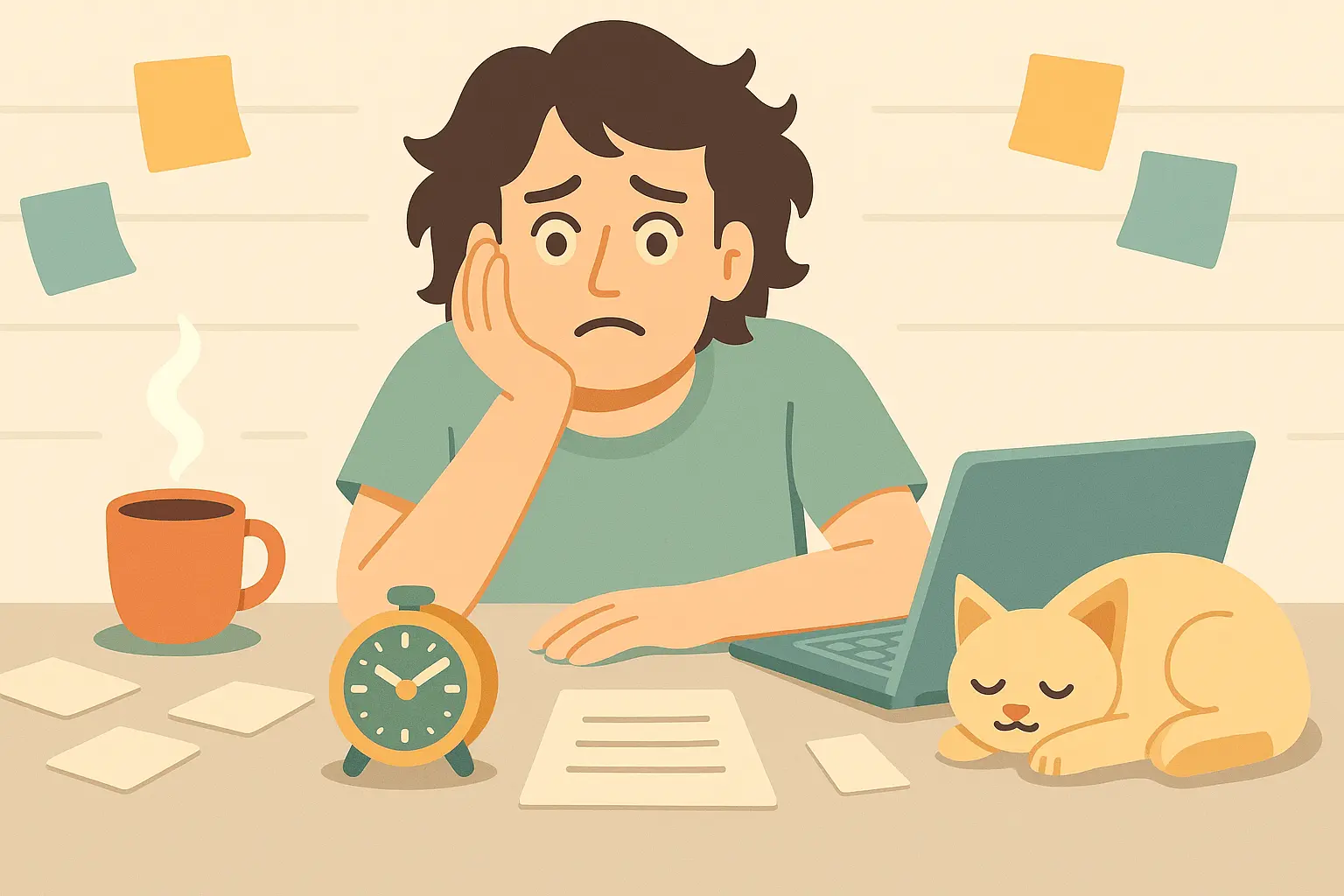
Let’s be honest. Coping with deadline pressure isn’t just about time management, it’s about dealing with short-term stress that shows up exactly when you don’t want it. If you’re anything like me, your brain interprets a looming deadline as a five-alarm fire. Heart races, your mind floods with strategies for deadline anxiety, most of which involve Googling productivity hacks instead of working.
For years, I thought I just needed more willpower. Turns out, it’s a bit more complicated. The fight-or-flight response isn’t reserved for actual danger. It kicks in just as hard for overdue essays, workplace projects, or classic night shift stress (if you’ve ever battled that, check out my full breakdown on night shift stress).
When panic hits, it’s tempting to indulge in impressive forms of procrastination. Suddenly, alphabetizing your bookshelf or reorganizing emails feels urgent. This isn’t laziness, it’s a physiological response that wants to shield you from discomfort, unfortunately, it shields you from finishing projects on time, too.
Breaking the Procrastination Habit: What Actually Works
Break the Task Down (and Down Again)
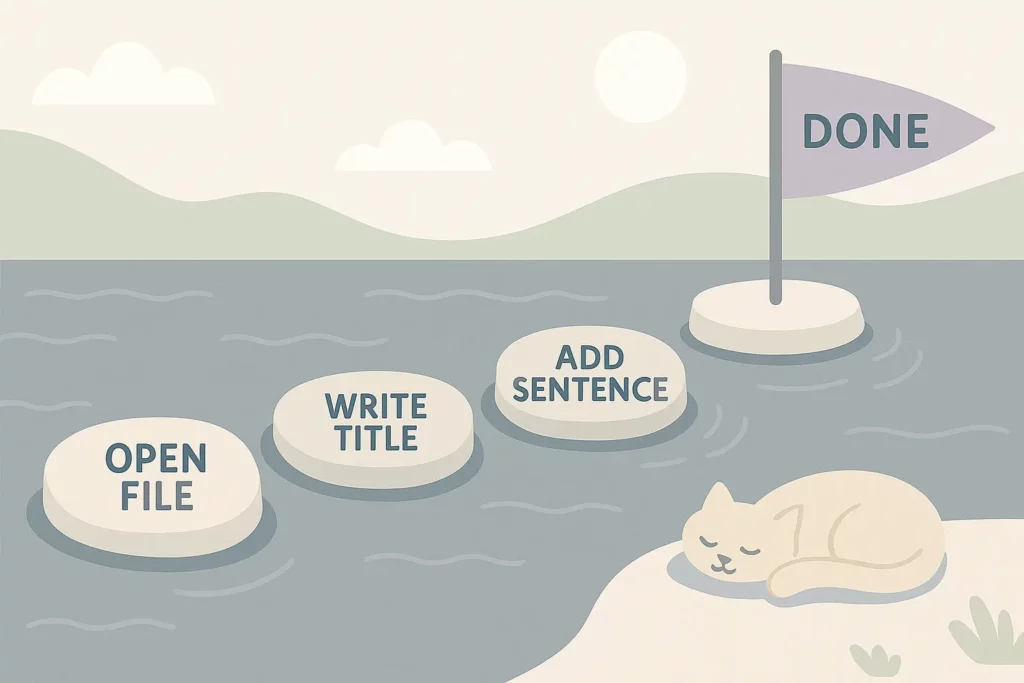
Overcoming procrastination starts with one reality: big tasks overwhelm the brain. When the to-do list feels endless, I don’t see “finish the assignment,” I see “escape at all costs.” My best realistic way to reduce stress? Shrink the mountain into pebbles. Open the file, write the title, then just add one sentence. Sometimes, my study system even includes simply making a list of what needs doing. That’s it. For more on breaking complex tasks into bite-size, check out my study system that changed the game for me.
Small wins aren’t just feel-good moments, they’re proven strategies for deadline anxiety. Each tiny step breaks the procrastination habit and builds momentum, and suddenly, that impossible project moves forward.
How I Outsmart My Own Brain With the Pomodoro Trick
Marathon sessions? Never worked for me. The classic Pomodoro Technique suggests 25-minute sprints, but honestly, my brain is still hitting snooze at minute 24. So I hacked it: 45 to 60 minutes of deep focus, then a 10-minute real break. I check if the world is still standing, probably question my life choices, then restart the block. Sometimes, though, I give in to procrastination just because I can. I wouldn’t recommend it, but I’m honest.
Stretching the focus window means I actually get into flow and, most days, finish projects on time without wanting to throw my laptop out the window.
Change the Scene for Realistic Stress Relief
If I stay at the same desk too long, motivation evaporates. Sometimes, simply switching chairs or moving rooms breaks the stress cycle. Even clearing off the table counts. Science agrees: a change of scenery can be one of the most realistic ways to reduce stress, spark new focus, and shake off that “stuck” feeling. It’s surprisingly effective.
Name the Stress and Laugh at It
Confession: I’m great at making things worse in my head. Now, I just admit it, I’m stressed because I care. Saying it out loud (to myself, my cat, or a wall) helps. Sometimes I reframe the nerves: maybe the jitters are just my body preparing to do something important. This mental shift, and a bit of humor, really helps me move from stuck to focused.
Micro-Mindfulness for People Who Don’t Meditate
I’m not a yogi, but a minute of slow breathing or “box breathing” (four in, hold for four, four out, hold for four) resets the system. Even one minute can break the cycle, sharpen focus, and give you the calm needed for dealing with short-term stress. It’s one of the best science-backed strategies for deadline anxiety I know.
How to Finish Projects on Time (Without Losing Your Mind)
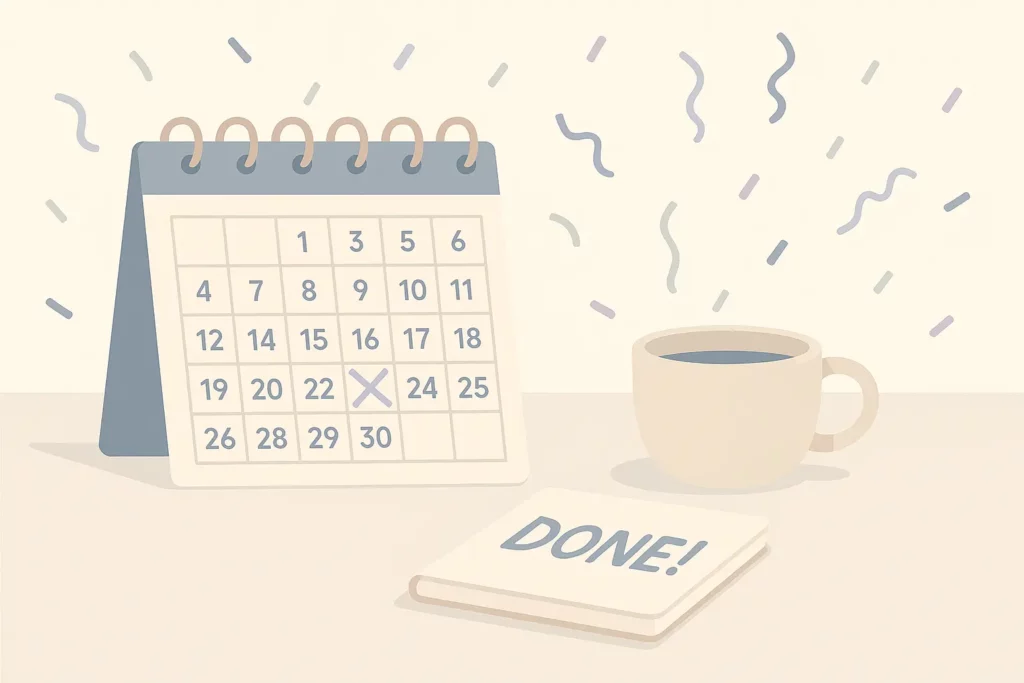
Most people who finish early aren’t superhuman. They’ve just set things up so focusing doesn’t feel like climbing a mountain. Break down tasks, use longer focus sessions, refresh your workspace, and accept that some days, realistic ways to reduce stress include forgiving yourself for not being perfect. If you want to track your own journey, document your progress and see how far you’ve come, it’s more motivating than you’d think.
Conclusion: Panic Is Normal, Progress Is Optional (But Recommended)
If you’re reading this while procrastinating, you’re in good company. Coping with deadline pressure, breaking the procrastination habit, and dealing with short-term stress is a messy, human process. The goal isn’t perfection, it’s finishing a bit earlier with less panic. And if you do end up alphabetizing your spice rack at 2 a.m., at least now you know why and what to do next time.
Reference Corner
Jamieson, J. P., Mendes, W. B., Blackstock, E., & Schmader, T. (2010). Turning the knots in your stomach into bows: Reappraising arousal improves performance on the GRE. Journal of Experimental Social Psychology, 46(1), 208,212. https://doi.org/10.1016/j.jesp.2009.08.015
Jerath, R., Edry, J. W., Barnes, V. A., & Jerath, V. (2015). Physiology of long pranayamic breathing: Neural respiratory elements may provide a mechanism that explains how slow deep breathing shifts the autonomic nervous system. Medical Hypotheses, 85(3), 486,496. https://doi.org/10.1016/j.mehy.2006.02.042
Knight, C., & Haslam, S. A. (2010). Your Place or Mine? Organizational Identification and Comfort as Mediators of Relationships Between the Managerial Control of Workspace and Employees’ Satisfaction and Well-being. British Journal of Management, 21(3), 717,735. https://doi.org/10.1111/j.1467-8551.2009.00683.x